The Shelf That Pays You Back: A Seven-Day Fridge Audit for Real Households
On a Sunday night in October, my fridge looked like a science fair project that had been left too long in a warm gym. I found a half-used jar of salsa, a bag of cilantro that had liquefied into something resembling pond water, and a container of rice from a takeout order I could not date. I did not clean it. I started an audit instead.
The plan was simple: for seven days, I would weigh and log every edible thing I threw away before it went into the bin. I used a $12 kitchen scale, a notebook, a marker, and a rough memory of what I had paid at the store. On day one, I cleared one shelf at eye level and labeled it EAT ME FIRST. That single move did more than any app I have tried.
The baseline is the point
Most fridge cleanouts are theater. You throw away the evidence, feel briefly virtuous, and then buy another bunch of parsley with no plan. An audit works because it gives you a baseline. For the first three days, do not change your shopping or cooking habits. Just log what goes bad and why.
My categories were unglamorous but useful: forgotten leftovers, herbs and greens, condiments, dairy, and duplicates. I also noted the reason. Was it hidden behind something? Did it arrive in a size no one could finish? Did I buy it because it was on sale and then forget it existed? That last one accounted for a surprising amount of my waste.
You do not need a perfect spreadsheet. A sheet of paper taped to the fridge works. Write the date, item, estimated cost, and reason. If you want to get fancy, add the number of days it spent in the fridge before you noticed it. That number is often the most revealing.
Do the math once
My seven-day total was 4.6 pounds and roughly $31 in food I had paid for and never eaten. Annualized, that is not a perfect forecast because holidays, vacations, and busy weeks change the pattern. But it is enough to understand the scale. A $700 annual leak is not universal, but it is a useful benchmark. If your audit lands near that number, you are not alone.
The environmental math runs alongside the financial one. Food that decomposes in a landfill without oxygen produces methane, a potent greenhouse gas. The EPA has estimated that food is the largest component of landfilled municipal solid waste. Composting is better than landfilling, but the first move is to not create the waste in the first place. The cheapest and least polluting food is the food you already bought and actually eat.
The eat-me-first shelf
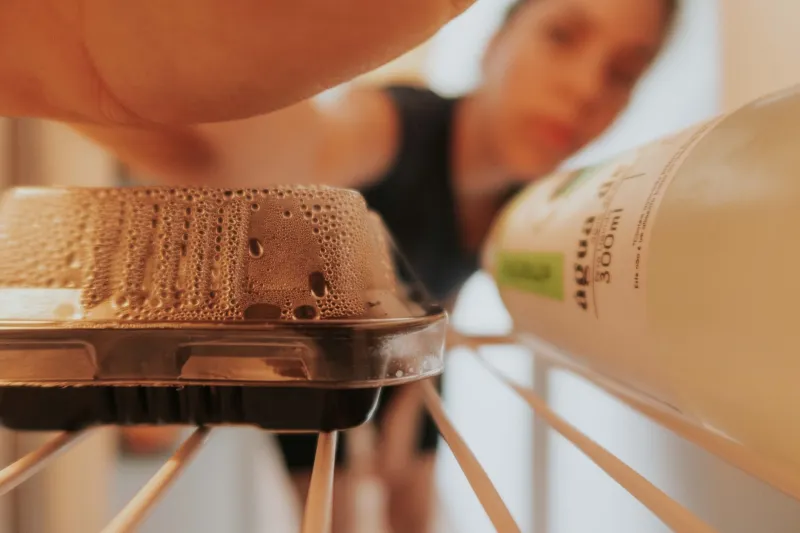
The shelf works because it removes the two biggest causes of fridge waste: invisibility and indecision. Put the items that need to be eaten first at eye level, in clear containers, with a date on the lid. When you open the fridge, you see the clock ticking. It is not subtle, and that is the point.
The crisper drawer is not a vegetable hospice. It is a storage tool, and most of us use it as a place to hide things until they become liquid. Herbs keep longer with their stems in a jar of water, loosely covered. Berries last longer if you wash them only right before eating. Apples and bananas release ethylene, which speeds up the decline of leafy greens, so keep them apart when you can. Leftovers in clear glass or plastic containers are more likely to be eaten than leftovers in foil-covered mystery bowls.
The 10-minute Sunday loop
Before you shop, shop your fridge. Open the eat-me-first shelf, count what is there, and plan three meals that use those items. They do not need to be impressive. A frittata, a stir-fry, a soup, or a grain bowl can absorb a lot of odds and ends. If you will not eat something before it turns, freeze it. Bread, cooked rice, herbs in oil, and leftover tomato sauce all freeze better than guilt.
Then write your shopping list for the gaps, not for a fantasy menu. This is the step that turns the audit into savings. You are not buying what a recipe says you should have. You are buying what your actual week needs.
What I would skip next time
I would stop buying three bunches of herbs because they cost less than one. I would buy one bunch, use it, and freeze the rest in oil or water. I would stop buying giant condiments for a single recipe. And I would stop treating composting as a first resort. It is a good backstop, not a license to overbuy.
By the fourth week, my waste was down to 1.8 pounds and my grocery bill was about $22 lighter. Your number will differ. The point is not to hit a perfect zero. The point is to turn a vague feeling of guilt into a routine you can repeat. The shelf pays you back in small, ordinary increments, which is how most real savings happen.