Bring Your Broken Toaster, Leave With a Story: Inside the Fix-It Clinics Reviving America's Stuff
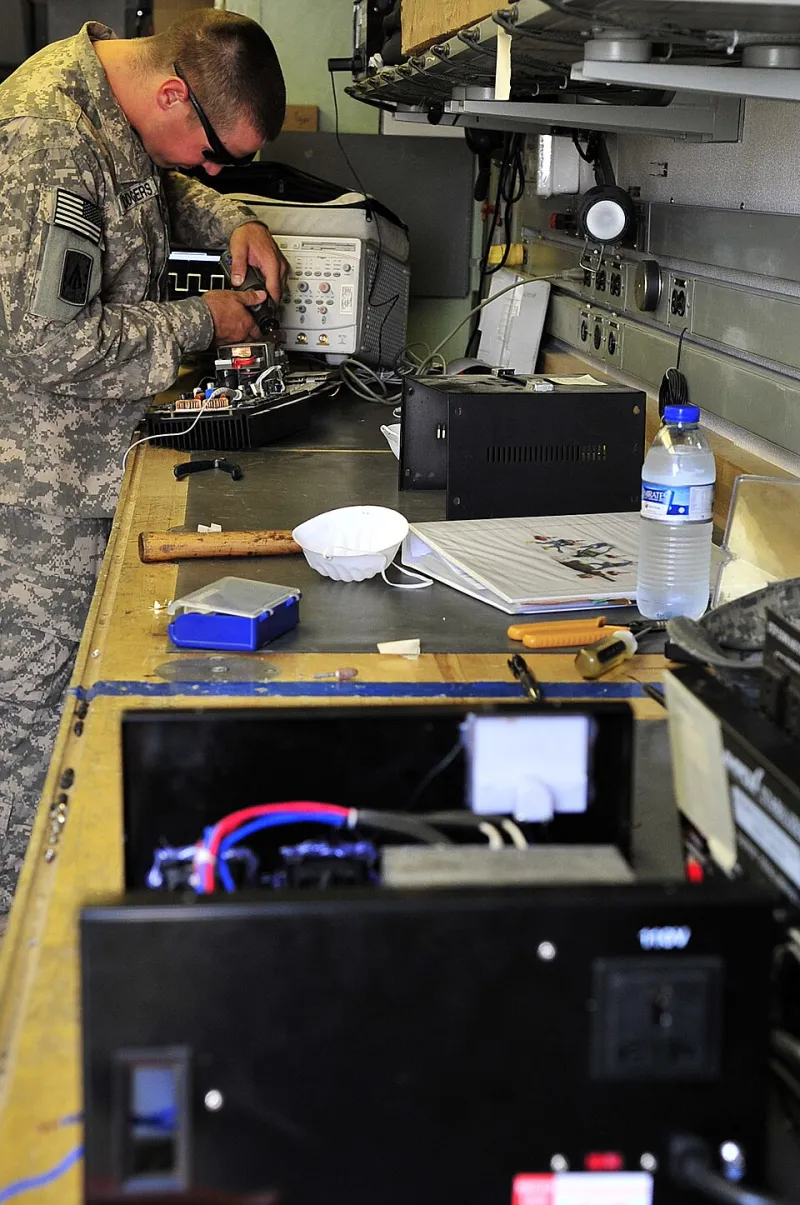
Photo: Tech. Sgt. Christina Styer, Public domain, via Wikimedia Commons
The lamp on the folding table in front of me hadn't lit up in three years. Its owner, a retired schoolteacher named Doreen, had already bought a replacement and stashed it in her garage. But before the new one went in the window, she heard about a repair café running out of the public library in her Cincinnati suburb, and she figured she had nothing to lose by bringing the old one in.
Forty minutes and one corroded switch later, the lamp glowed. Doreen applauded. The volunteer who fixed it, an aerospace engineer named Ray who does this on the second Saturday of every month, just grinned and moved on to a wobbly chair.
Scenes like this are playing out in more places than you'd think. Repair cafés — volunteer-run fix-it events where neighbors bring broken household items instead of tossing them — have grown from a Dutch idea that launched in Amsterdam in 2009 into a nationwide network here in the US, with hundreds of events now held regularly in libraries, churches, maker spaces, and community centers. There's even a Fix It Friday in some towns and a Repair Café International USA organization helping local groups get off the ground.
What Actually Happens at One
The format is simple. You register your item at the door — a toaster, a pair of jeans with a blown-out knee, a kid's remote-control car, a blender making that sound you've been ignoring. A volunteer greeter pairs you with someone whose skills match the problem. Crucially, you stay. You watch. You ask questions. You hold the flashlight.
That's the part that surprises first-timers. This isn't a drop-off service. The unofficial motto of the movement is "fixers teach, owners help," and it changes the whole texture of the event. You leave not just with a working item but with a little more confidence about opening one up yourself next time.
The categories vary by event, but the usual lineup looks like this:
- Small appliances — toasters, lamps, fans, coffee makers (the single most common guest, and often the easiest fix: a bad fuse or a crumb-clogged heating element)
- Textiles — torn seams, missing buttons, zipper replacements
- Bikes — flat tires, brake adjustments, chain issues
- Jewelry and small electronics — clasps, batteries, soldering
- Furniture — wobbles, loose joints, missing hardware
Some events draw the line at anything with a lithium battery or a microwave, for safety reasons. Nobody's fixing your flat-screen here.
One Saturday, By the Numbers
At the Cincinnati event, the tally board at the door told the story by mid-afternoon. Thirty-one items checked in. Twenty-four left working. Four were diagnosed as truly done for — usually a motor that had seized or a circuit board that would cost more to replace than the item was worth. Three owners took parts home to finish the job themselves, which still counts.
Twenty-four items. It doesn't sound like much until you zoom out. The average American throws away roughly 80 pounds of clothing a year, and the EPA estimates that over 4 million tons of small electronics and appliances end up in landfills annually. Multiply one Saturday by 50 events by 52 weekends, and you start to see the dent forming.
There's a quieter number that matters more, though. Nearly every attendee I spoke with said some version of the same thing: "I didn't know this could be fixed." That mindset shift — from replace to repair — is the real product these events are selling, and it's free to take home.
Why Now
A few forces are converging. Right-to-repair legislation has gained real traction in states like Minnesota, Colorado, New York, and California, pushing manufacturers to make parts and manuals more accessible. Meanwhile, tariffs and supply-chain jitters have made new appliances pricier, and a generation raised on YouTube tutorials has discovered that a $12 multimeter and a five-minute video can resurrect a lot of gear.
The volunteers, for their part, tend to describe it as a social activity that happens to involve screwdrivers. Many are retired tradespeople or engineers who miss working with their hands. Others are twenty-somethings from local maker spaces who can solder a circuit board before lunch. The repair café is one of the few remaining places where those two generations regularly end up at the same table.
Find One Near You (Or Start One)
If this sounds like your kind of Saturday morning, here's the practical part.
To find an event: Search "repair café" plus your city, check your public library's events page, or look up Repair Café International's online map. Churches, senior centers, and universities with engineering programs are also common hosts. Many communities run them monthly or seasonally.
Before you go: Bring any parts or accessories that came with the item, a photo of the problem if it's intermittent, and a little patience — popular events can have a wait list. And bring something even if it's borderline broken. Worst case, you get a free diagnosis and a straight answer about whether it's worth saving.
To start one in your town: The official Repair Café model is free to adopt, and the international organization provides starter manuals in English. The realistic checklist looks like this:
- Recruit three to five fixers with overlapping skills (a sewist, someone handy with appliances, a general tinkerer covers most of the bases)
- Find free space — libraries and community centers are natural allies and often have tools on hand
- Gather basics: extension cords, batteries for testing, a multimeter, sewing kits, safety glasses
- Set expectations up front: no guarantees, no drop-offs, safety first
- Keep a tally board — it's great for local press and for securing your next venue
The first event in most towns draws a dozen people. The third one draws forty. Word travels fast once people realize the garage pile of "broken" stuff might actually have a pulse.
The Bigger Fix
Nobody at a repair café is pretending that twenty-four resurrected toasters will save the planet. The point is sharper than that: every item that leaves working is a small act of refusal — a refusal to accept that stuff is disposable and that fixing is a lost art.
Doreen's lamp is back in her window. The replacement is still in its box in the garage, waiting for the next neighbor whose lamp won't come back to life. That's how the movement spreads — one fixed thing, one borrowed confidence, one Saturday at a time.