Midnight Fueling: The Hidden Economics of Charging an EV While America Sleeps
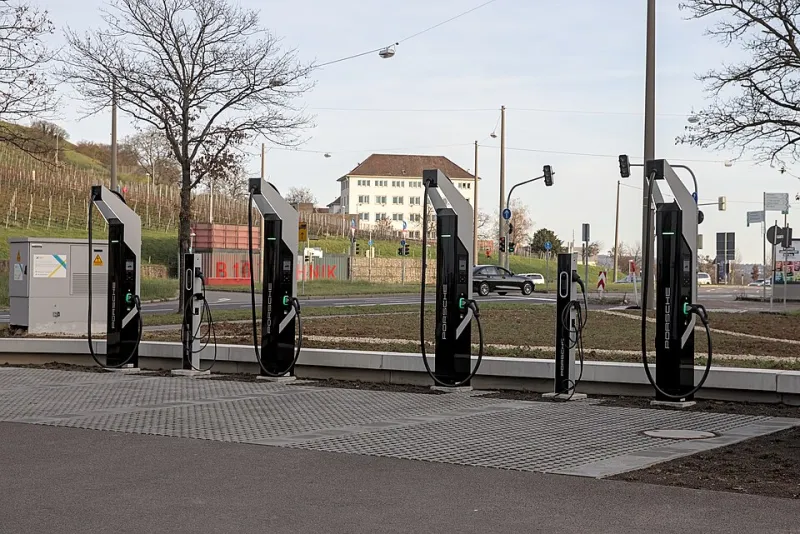
Photo: Alexander Migl, CC BY-SA 4.0, via Wikimedia Commons
When I signed the paperwork on my electric car, I thought the big decision was behind me. I'd picked the model, the color, the range. What I didn't realize was that I'd just enrolled in a crash course in how my house actually works.
The car, it turns out, is the easy part. The real story lives in the meter on the side of my garage, the dusty breaker panel in the basement, and a charging schedule that now runs like clockwork while my neighborhood sleeps.
The Charger Nobody Talks About
Here's the first thing I wish someone had told me: the charging hardware matters more than the marketing suggests. Every EV comes with a "trickle charger" — a cord that plugs into a regular wall outlet and adds roughly three to five miles of range per hour. That's fine if you park all weekend. It's maddening if you get home at 6 p.m. with a low battery and a 7 a.m. commute.
A Level 2 charger — the 240-volt unit that needs a dedicated circuit, like an electric dryer — changed everything. Mine adds around 25 to 30 miles of range per hour, which means an overnight session easily covers a week of typical American driving. Installation ran me about $650, including an electrician who spent two hours muttering lovingly at my panel. The federal tax credit for home charging equipment (30% off, up to $1,000) softened the blow considerably.
If your panel is old or maxed out, budget more. Some homes need a panel upgrade before they can handle the extra load. Ask before you buy the car, not after.
The Clock Is the Real Currency
The second lesson: when you charge matters almost as much as how much.
My utility offers a time-of-use rate plan. During peak hours — late afternoon into evening, when every AC unit in the county is humming — electricity costs a premium. After midnight, it drops to a fraction of the price. On my plan, the difference between charging at 5 p.m. and charging at 1 a.m. is roughly the difference between filling up at a highway rest stop and at a discount club.
I set my car to charge automatically at 12:30 a.m. and forgot about it. That single scheduling decision cut my charging costs by around 40%. No behavior change required beyond tapping a setting in an app once. It is, without exaggeration, the laziest meaningful saving I've ever engineered.
There's a grid-level benefit, too. The overnight hours are when the grid is cleanest and least strained in most of the country — wind is often blowing, demand is low, and peaker plants (the dirty, expensive backups) sit idle. Charging while America sleeps is one of those rare wins that's good for your wallet and the system at large.
Pairing With the Sun
The third act of my education: solar.
I don't have panels yet, but my neighbor does, and watching his setup taught me the endgame. His panels flood his meter with credits on sunny afternoons; his car soaks up cheap overnight power. On a net-metered plan, the math works out so his annual driving fuel cost hovers near zero.
Even without panels, the pairing logic applies. Some utilities now offer special EV rates that are nearly free during designated "super off-peak" windows. Others are experimenting with programs that pay you to charge when the grid has surplus renewable power. The direction of travel is clear: the car isn't just an appliance that consumes electricity — it's a flexible one that can be steered to when electricity is cheapest and cleanest.
If you're shopping for solar, size your system with the car in mind. An EV adds roughly 3,000 to 4,000 kilowatt-hours of annual demand for a typical driver. That's not a rounding error.
Charging at the Speed of Life
The mental shift was the biggest surprise. With a gas car, fueling is an event — a detour, a queue, a transaction. With home charging, it dissolves into the background. My car is full every morning the way my phone is full every morning: because I stopped thinking about it.
The only planning happens on road trips, where DC fast charging turns a lunch stop into a top-up. That's a different rhythm, and it takes a few trips to internalize. But 90% of my driving is local, and 100% of that happens from a garage that refills itself while I dream.
What I'd Tell My Past Self
Three things, briefly:
- Call your utility before the car arrives. Ask about time-of-use rates and EV-specific plans. The savings start on day one.
- Get the panel inspected early. Knowing whether you need an upgrade turns a surprise into a line item.
- Automate everything. Scheduled charging is the whole game. Set it, forget it, save.
The buzz around electric cars is about the driving — the torque, the silence, the tailpipe that never was. But the quieter transformation, the one that actually rewires your household, happens at 1 a.m. in your garage, at a rate you negotiated with your utility, powered increasingly by wind you'll never see.
The car gets the headlines. The meter gets the savings.